

Exploring the nuances between business and personal insurance sheds light on the distinct objectives and coverage scopes that cater to different needs. Delve into the realm of insurance to uncover the key disparities that dictate premiums and protection for businesses and individuals.
As we embark on this journey, let's dissect the fundamental disparities between business and personal insurance, unveiling the intricate web of factors that shape these financial safeguards.
Key Differences Between Business and Personal Insurance
When it comes to insurance, there are distinct variations between business and personal coverage. Let's delve into the key variations to understand their unique purposes and objectives.
Business Insurance
Business insurance is specifically designed to protect companies from financial losses resulting from risks such as property damage, liability, and employee-related risks. The fundamental purpose of business insurance is to safeguard the assets and operations of a business entity.
- Business insurance focuses on covering risks associated with the commercial activities of a company.
- It provides protection against lawsuits, property damage, and business interruption.
- Business insurance can also include coverage for professional liability, cyber liability, and commercial auto insurance.
Personal Insurance
On the other hand, personal insurance aims to provide financial protection to individuals and families against unforeseen events that may impact their health, property, or life. The primary objectives of personal insurance are to ensure peace of mind and financial security for individuals and their loved ones.
- Personal insurance typically includes coverage for health, life, home, and auto insurance.
- It focuses on protecting individuals from personal liabilities, medical expenses, and property damage.
- Personal insurance policies are tailored to meet the specific needs and preferences of individuals and families.
Coverage Scope Comparison
When comparing the coverage scope of business insurance and personal insurance, it is evident that business insurance offers more extensive coverage for commercial risks, while personal insurance focuses on individual and family-related risks.
- Business insurance covers risks related to business operations, employees, and commercial properties.
- Personal insurance provides coverage for personal liabilities, health, and property damages.
- The scope of coverage under business insurance is broader and more complex due to the diverse risks involved in commercial activities.
Factors Influencing Insurance Premiums
Insurance premiums for both businesses and individuals are influenced by various factors that determine the level of risk associated with the insured party. These factors play a crucial role in determining the cost of insurance coverage.
- For businesses, factors such as the industry type, size of the business, location, and past claims history can impact insurance premiums.
- Individual insurance premiums are influenced by factors like age, health condition, lifestyle choices, and the coverage amount desired.
- Insurance companies assess these factors to calculate the level of risk and determine the appropriate premium rates for businesses and individuals.
Types of Coverage Offered
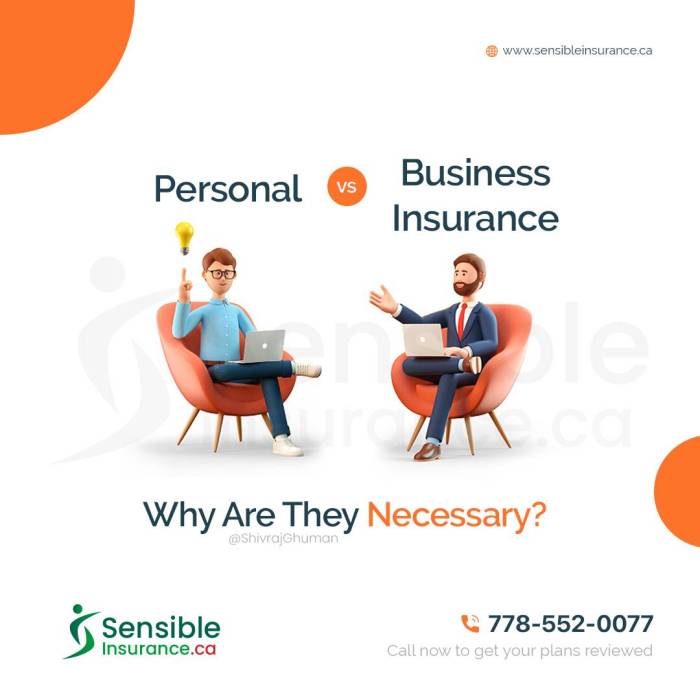
When it comes to insurance coverage, both businesses and individuals have unique needs that require different types of protection. Below, we will delve into the specific types of insurance coverage available for businesses and the common types offered for personal insurance.
Types of Business Insurance Coverage
- General Liability Insurance: Protects businesses from legal claims related to bodily injury, property damage, and advertising injury.
- Property Insurance: Covers damage to a business's property, including buildings, equipment, and inventory.
- Workers' Compensation Insurance: Provides coverage for employees who are injured or become ill while on the job.
- Professional Liability Insurance: Also known as Errors and Omissions Insurance, this coverage protects businesses from claims of negligence or inadequate work.
Types of Personal Insurance Coverage
- Health Insurance: Covers medical expenses for individuals and families in case of illness or injury.
- Auto Insurance: Protects individuals from financial loss in case of accidents or theft involving their vehicles.
- Homeowners Insurance: Provides coverage for damage or loss to a person's home and belongings.
- Life Insurance: Offers financial protection to beneficiaries in the event of the policyholder's death.
Scenarios Requiring Business Insurance
Business insurance is essential when a company has employees, interacts with clients, owns property, or faces potential lawsuits related to its operations.
Scenarios Requiring Personal Insurance
Personal insurance is necessary to protect individuals and families from unforeseen medical expenses, auto accidents, property damage, or loss of income due to death.
Importance of Tailoring Coverage
It is crucial for both businesses and individuals to tailor their insurance coverage to their specific needs. By customizing their policies, they can ensure they are adequately protected in case of unexpected events that could result in financial loss.
Legal and Regulatory Differences
Insurance requirements and regulations differ significantly for businesses compared to individuals. Businesses often have more complex insurance needs due to the nature of their operations, size, and assets involved. Here are some key points to consider:
Legal Requirements for Businesses
- Businesses are typically required to carry certain types of insurance based on their industry, size, and location. For example, workers' compensation insurance is mandatory for most businesses with employees.
- Business insurance policies may need to meet specific coverage limits and requirements set by state laws or industry regulations.
Regulatory Framework for Business Insurance
- Business insurance is regulated at the state level, with each state having its own insurance department overseeing compliance with insurance laws and regulations.
- Insurance companies offering business insurance must adhere to strict guidelines and financial regulations to ensure they can meet their obligations to policyholders.
Implications of Non-Compliance
- Failure to comply with insurance regulations can result in fines, penalties, or even legal action against the business. This can lead to financial losses and damage to the business's reputation.
- Non-compliance with insurance requirements can also leave a business vulnerable to lawsuits or claims that are not covered by insurance, putting the business at risk of significant financial losses.
Role of Insurance Agents or Brokers
- Insurance agents or brokers play a crucial role in helping businesses understand their insurance needs and ensuring they have the right coverage in place to comply with legal requirements.
- Agents and brokers can help businesses navigate the complex insurance landscape, compare policies from different insurers, and ensure they are getting the best coverage at a competitive price.
Cost Factors and Considerations

Insurance premiums for businesses are influenced by several key cost factors. These factors include the size and type of business, the industry it operates in, the location of the business, the coverage limits selected, the claims history, and the level of risk associated with the business operations.
Comparison of Pricing Structures
The pricing structures of business insurance policies differ from personal insurance policies in several ways. Business insurance premiums are typically higher due to the increased risk associated with business operations. Business policies also often offer more customization options and higher coverage limits compared to personal policies.
Strategies to Reduce Insurance Costs
Businesses and individuals can implement various strategies to reduce insurance costs without compromising coverage. These strategies include implementing safety measures to reduce the risk of accidents, bundling multiple policies with the same insurer for discounts, increasing deductibles to lower premiums, and conducting regular reviews of coverage needs to ensure it aligns with the business or individual's current situation.
Role of Risk Assessment
Risk assessment plays a crucial role in determining insurance premiums for both businesses and individuals. Insurers assess the level of risk associated with the insured party to calculate an appropriate premium. Businesses and individuals can lower their premiums by demonstrating a commitment to risk management through implementing safety protocols, maintaining a good claims history, and providing accurate and up-to-date information to insurers during the underwriting process.
Conclusion

In conclusion, grasping the essential disparities between business and personal insurance equips us with the knowledge to make informed decisions when safeguarding our assets. Remember, understanding these differences is the first step towards ensuring comprehensive coverage tailored to your unique needs.
User Queries
What is the fundamental purpose of business insurance?
Business insurance aims to protect companies from financial losses due to unforeseen circumstances like property damage or liability claims.
How does the coverage scope of business insurance differ from personal insurance?
Business insurance typically offers coverage for business-specific risks such as business interruption, while personal insurance focuses more on individual assets like homes and cars.
What are some key cost factors that influence insurance premiums for businesses?
Factors like the size of the business, industry risks, and claims history can significantly impact insurance premiums for businesses.
How do legal requirements differ for businesses compared to individuals in insurance?
Businesses often have specific legal obligations regarding insurance coverage, such as workers' compensation requirements, which individuals do not have.

